
How To Recover From Pornography Addiction?
QUITTR is the #1 porn quitting app in the world. Join 1,000,000+ others on a mission to be the best person they can be.
Last Edited
Porn addiction recovery is the process of overcoming compulsive pornography use through sustained abstinence, behavioral change, and neuroplastic brain recovery. Porn addiction recovery, also called pornography addiction recovery or overcoming porn addiction, involves stopping compulsive use and allowing the brain's reward system to recalibrate through neuroplasticity.
Neuroimaging studies have identified brain differences in compulsive pornography users, including reduced gray matter volume in the striatum, weakened prefrontal cortex connectivity, and reduced neural activation in the reward system. Neuroplasticity research in related addictions suggests these differences can reverse during sustained abstinence. Neuroplasticity allows the brain to form new neural pathways and gradually restore reward processing.
Pornography addiction is not a formal diagnosis in the Diagnostic and Statistical Manual of Mental Disorders (DSM-5). The World Health Organization included compulsive sexual behaviour disorder (CSBD) as an impulse control disorder in the ICD-11, which was formally adopted in 2019. This classification provides a clinical framework for the condition that pornography addiction recovery addresses.
Recovery from porn addiction involves understanding whether recovery is possible, learning the steps required to recover, knowing how long the process takes, recognizing what each stage of the recovery timeline looks like, and developing strategies to manage relapse.
Table Of Contents
Can You Recover From Porn Addiction?
Yes, you can recover from porn addiction.
Recovery is possible because of neuroplasticity. Neuroplasticity is the brain's ability to reorganize itself by forming new neural connections throughout life. The brain differences associated with pornography addiction are not considered permanent, based on neuroplasticity principles and recovery evidence from related addictions.
Three areas of research inform the understanding of pornography-related brain recovery. First, Kühn and Gallinat (2014, JAMA Psychiatry) found that pornography consumption was associated with reduced gray matter volume and weakened prefrontal cortex connectivity in a cross-sectional study of 64 men. These associations involve neuroplastic processes, and the same mechanisms that produce changes can also reverse them. Second, substance addiction research shows that weakened connectivity between the striatum and prefrontal cortex can strengthen during sustained abstinence. Third, DeltaFosB, a transcription factor that accumulates during repeated addictive behaviors in animal models, degrades naturally over approximately one to two months when the behavior stops (Nestler et al., 2001).
Recovery does not mean the addiction never existed. Recovery means the brain has restored healthy reward processing and the individual has developed sustainable behavioral patterns that prevent return to compulsive use. The ICD-11 classification of CSBD provides a formal diagnostic framework, confirming that individuals who ask whether is pornography addictive can also understand that recovery is achievable.
How to Recover From Porn Addiction
Recovering from porn addiction requires a structured approach that addresses both the behavioral pattern and the underlying neurological dependence.
Successful recovery combines sustained abstinence from compulsive pornography use with behavioral restructuring, professional support, and relapse prevention strategies. Recovery is not a single action but a process involving multiple concurrent steps.
The steps to recover from porn addiction include recognizing the addiction, removing access to pornography and managing triggers, building an accountability and support system, seeking professional treatment, developing healthy coping mechanisms, and creating a long-term relapse prevention plan. These recovery steps are explained below.
Recognize the addiction. Acknowledge that pornography use has become compulsive and is causing harm. Self-assessment against ICD-11 CSBD criteria provides a clinical framework for recognition. Many individuals first recognize the problem when they notice the signs of pornography addiction, such as repeated failure to reduce use or experiencing withdrawal-like symptoms when attempting to stop.
Remove access and manage triggers. Install content blockers on all devices, delete stored pornography, and identify personal triggers such as stress, boredom, and loneliness. Removing environmental cues reduces the brain's conditioned craving response. Understanding how to stop watching pornography through practical cessation strategies supports this step.
Build accountability and support. Establish accountability relationships with a trusted person, partner, therapist, or recovery group. Accountability reduces the isolation that sustains compulsive pornography use. Support communities include 12-step programs (Sex Addicts Anonymous, Sexaholics Anonymous), SMART Recovery groups, and digital recovery platforms like QUITTR.
Seek professional treatment. Engage with a therapist specializing in compulsive sexual behavior. Cognitive-behavioral therapy (CBT) and acceptance and commitment therapy (ACT) have shown promise for pornography addiction in early clinical studies. A professional can also assess co-occurring conditions such as depression, anxiety, and ADHD that may be driving compulsive use.
Develop healthy coping mechanisms. Replace pornography use with activities that produce natural dopamine through healthy pathways. Exercise, social connection, and mindfulness practice may support recovery by restoring natural reward processing and promoting neuroplasticity.
Create a relapse prevention plan. Identify high-risk situations, develop specific response strategies for cravings, and establish accountability check-ins. Relapse prevention is an ongoing component of recovery, not a one-time step.
How Long Does It Take to Recover From Porn Addiction?
Porn addiction recovery takes 90 days to 12 months or longer, depending on the severity and duration of the addiction, individual neurobiology, and the quality of support during recovery.
The 90-day figure represents the initial neuroplasticity recovery benchmark. This is the minimum period for the brain's reward system to begin meaningful recalibration. Gary Wilson's "Your Brain on Porn" helped popularize this timeline, drawing on DeltaFosB research, dopamine dysregulation models, and recovery community reports.
Most individuals experience significant improvement in cravings, mood stability, and cognitive clarity within 3 to 6 months of sustained abstinence. Longer addictions of 10 or more years and earlier onset before age 14 may require longer recovery periods, as exposure during critical periods of brain development can establish deeper behavioral patterns.
Recovery is not linear. Symptoms may fluctuate, and temporary setbacks are a normal part of the process. Recovery timelines are based primarily on clinical observation, self-report data, and neuroscience principles rather than randomized controlled trials specific to pornography cessation. Individual variation is significant.
The recovery timeline below breaks the journey into specific stages. Brain healing occurs through neuroplasticity throughout this process. Porn-induced erectile dysfunction (PIED) follows its own recovery timeline of 3 to 6 months.
Porn Addiction Recovery Timeline
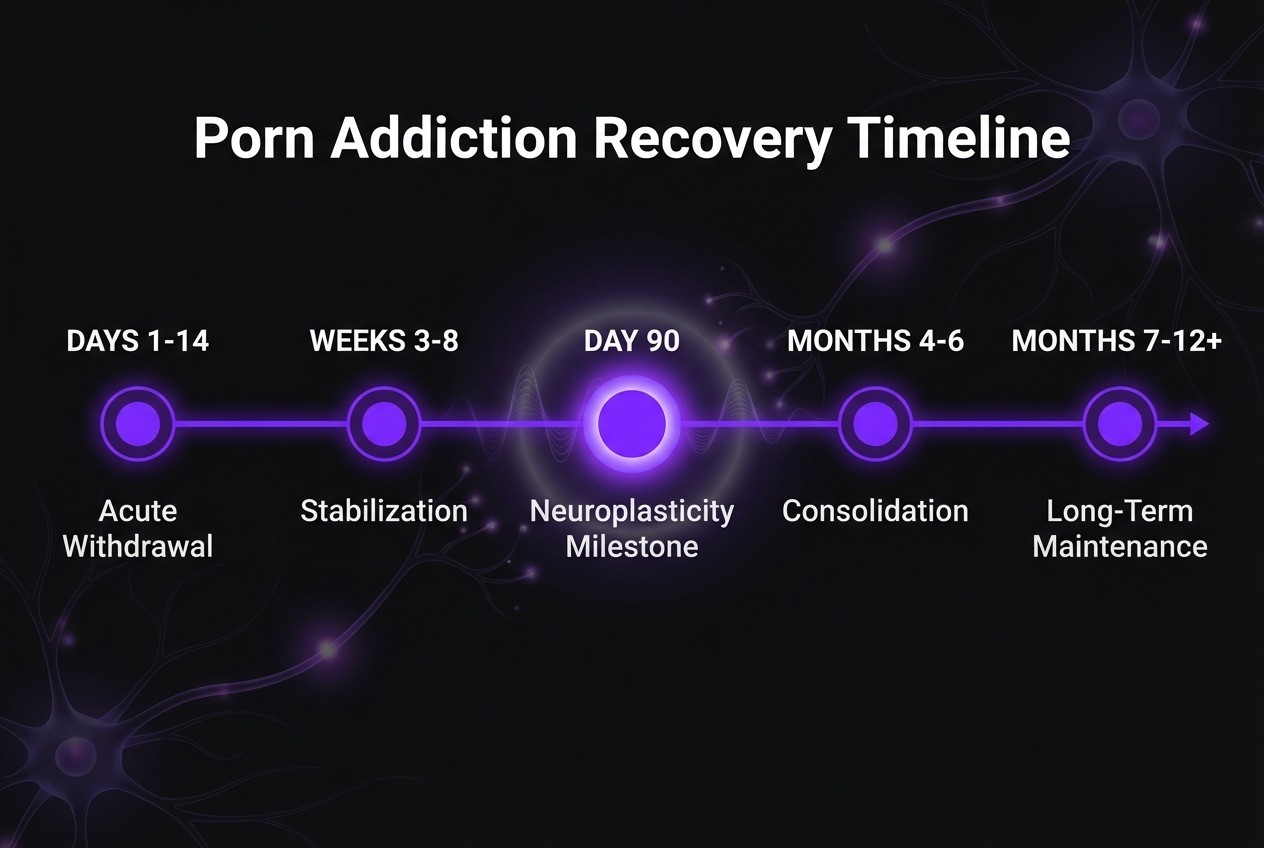
The porn addiction recovery timeline includes five stages: the acute withdrawal phase (days 1–14), the stabilization phase (weeks 3–8), the 90-day neuroplasticity milestone, the consolidation phase (months 4–6), and the long-term maintenance phase (months 7–12 and beyond). These stages are listed below.
Days 1–14: Acute withdrawal. This is the most intense period. Cravings, mood swings, insomnia, irritability, and anxiety peak as the brain adjusts to the absence of the elevated dopamine stimulation produced by pornography. This is when most relapses occur.
Weeks 3–8: Stabilization. Acute withdrawal symptoms begin to subside. Many individuals experience flatline, a temporary period of reduced libido and emotional flatness. Cravings continue but decrease in frequency and intensity.
Day 90: Neuroplasticity milestone. This is the commonly cited recovery benchmark. Based on animal research, the addiction-related transcription factor DeltaFosB is largely undetectable by this point. Many individuals report improved mood, concentration, and sexual response. This milestone does not mean recovery is complete.
Months 4–6: Consolidation. The brain continues to strengthen new neural pathways established during abstinence. Prefrontal cortex connectivity, which plays a central role in impulse control and emotional regulation, continues to recover. Healthy coping mechanisms become more established.
Months 7–12+: Long-term maintenance. Recovery transitions from active healing to sustained lifestyle management. Cravings become rare and manageable. The focus shifts to relapse prevention, continued personal growth, and maintaining the behavioral changes that support recovery.
Can Your Brain Heal From Porn Addiction?
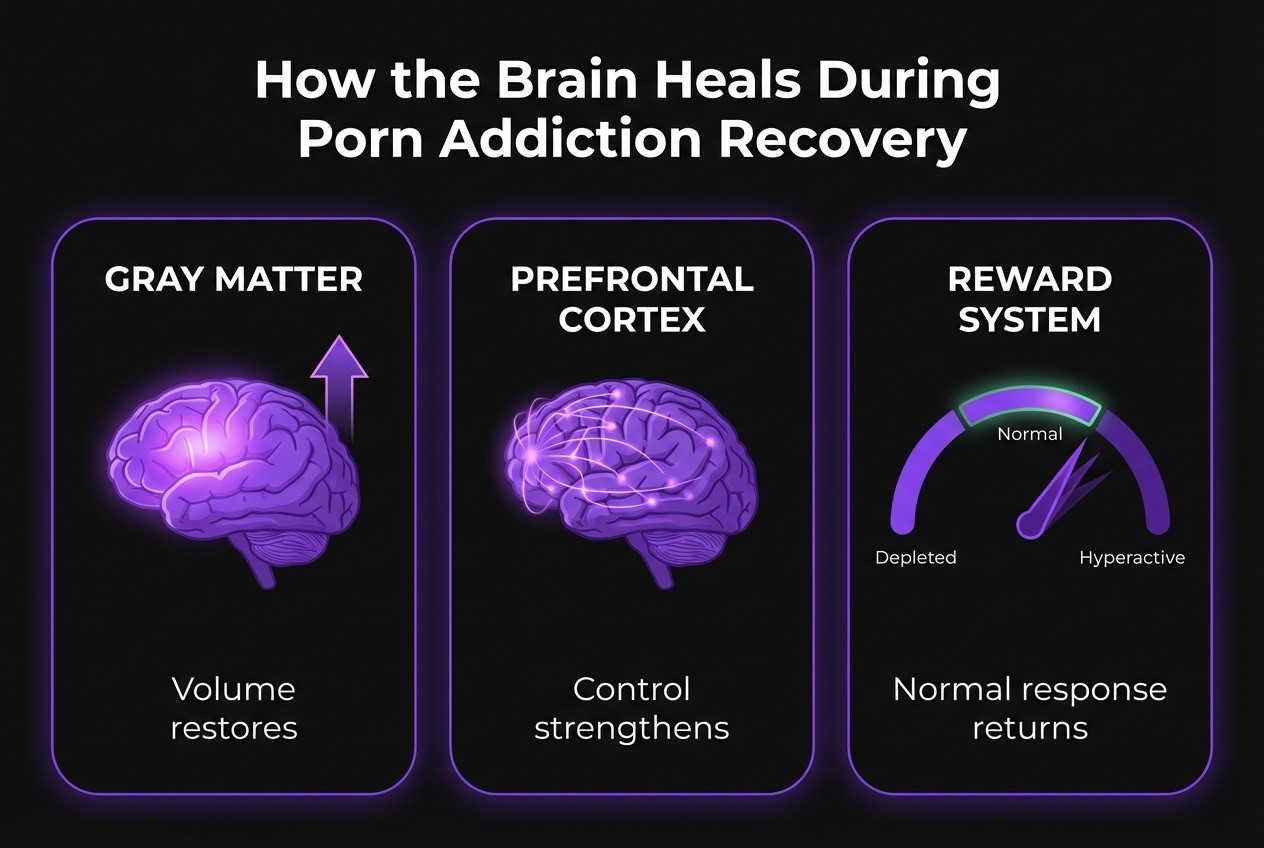
Yes, your brain can heal from porn addiction.
The brain differences associated with compulsive pornography use are not considered permanent. Neuroplasticity allows the brain to reorganize itself by forming new neural connections. Substance addiction research demonstrates that structural and functional brain changes can reverse during sustained abstinence, and the same neuroplastic mechanisms apply to behavioral addictions.
Gray matter volume can recover during sustained abstinence through neuroplastic processes. Prefrontal cortex connectivity, which plays a central role in impulse control, strengthens as the brain recalibrates without compulsive stimulation. The reward system gradually restores its sensitivity to everyday activities as the desensitization produced by compulsive use reverses.
Can You Recover From Porn-Induced Erectile Dysfunction (PIED)?
Yes, you can recover from porn-induced erectile dysfunction (PIED).
PIED is hypothesized to occur when compulsive pornography use desensitizes the brain's sexual arousal pathways, reducing response to real-world sexual stimulation. Recovery typically takes 3 to 6 months of sustained abstinence from pornography, though individual timelines vary based on duration and severity of use.
PIED recovery follows the same neuroplasticity mechanisms as overall porn addiction recovery. The brain's sexual arousal pathways gradually recalibrate to respond to normal stimulation.
Is Porn Relapse Normal During Recovery?
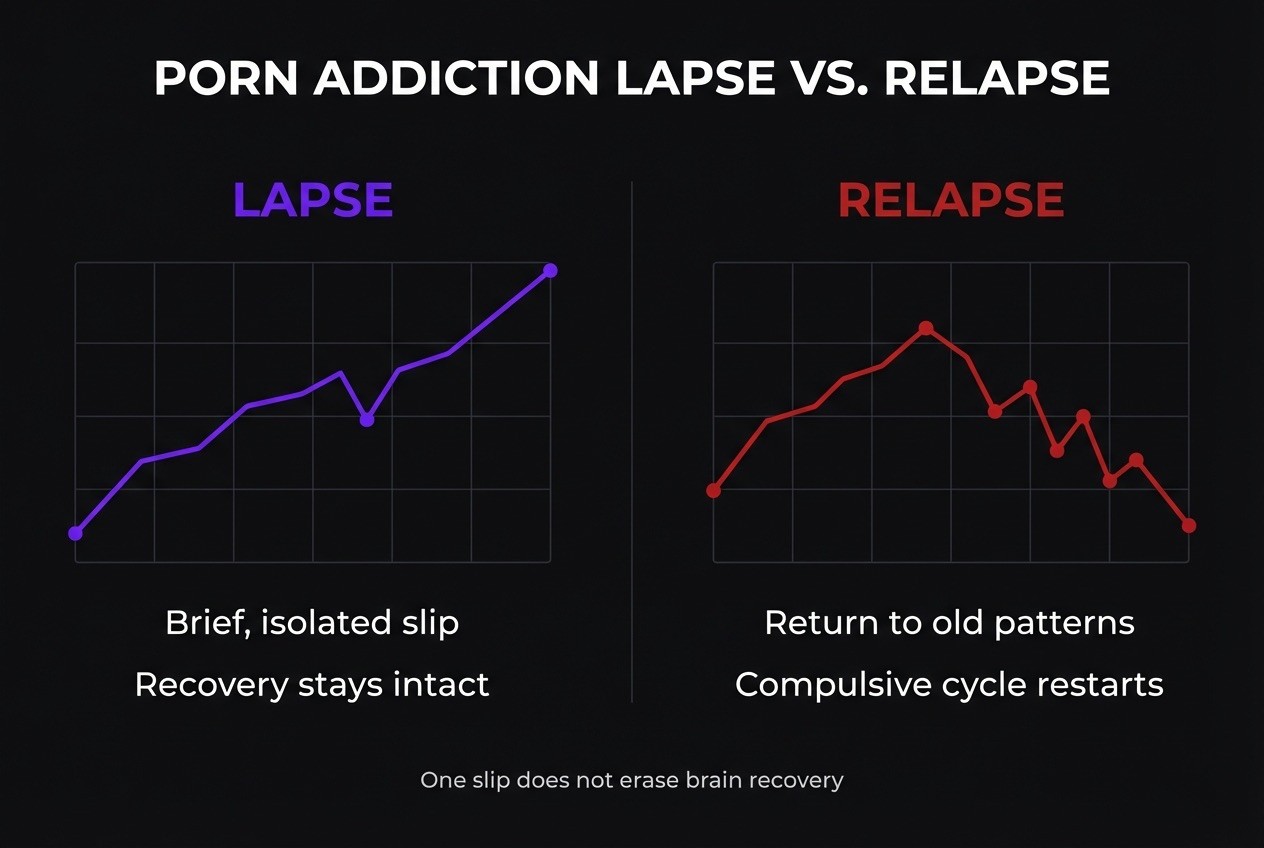
Yes, porn relapse is normal during recovery.
Relapse is a common feature of behavioral addiction recovery. The National Institute on Drug Abuse (NIDA) estimates that 40% to 60% of individuals recovering from addiction experience relapse. This rate is comparable to relapse rates for chronic medical conditions like hypertension and asthma.
A lapse and a relapse are different. A lapse is a single, brief return to pornography use. A relapse is a sustained return to compulsive patterns. A single lapse does not erase the neurological progress made during recovery. Based on the molecular biology of DeltaFosB, which requires repeated exposure to accumulate, a single episode is unlikely to reverse the neural pathway changes achieved during abstinence.
Common relapse triggers include stress, emotional distress, loneliness, boredom, fatigue, and unfiltered access to devices. Recognizing these triggers in advance is a core component of relapse prevention.
Do not frame the lapse as total failure, because neurological progress is not erased. Identify the specific trigger that led to the relapse. Re-engage accountability systems such as a therapist, support group, or accountability partner. Return to abstinence immediately rather than allowing the lapse to escalate into sustained compulsive use.
Relapse frequency typically decreases over time as the brain's reward system stabilizes and coping mechanisms strengthen.
How to Get Help for Porn Addiction Recovery
The most effective way to start porn addiction recovery is to seek professional support from a therapist specializing in compulsive sexual behavior.
Professional therapy is the most evidence-based starting point. Cognitive-behavioral therapy (CBT) and acceptance and commitment therapy (ACT) are the most studied and evidence-supported approaches for compulsive pornography use. A therapist can also assess and treat co-occurring conditions such as depression, anxiety, and ADHD that may drive compulsive use.
Support groups provide structured accountability and shared experience. Options include 12-step programs such as Sex Addicts Anonymous and Sexaholics Anonymous, SMART Recovery, and peer support communities.
Digital recovery tools provide support between therapy sessions. Accountability apps, content blockers, and structured daily recovery programs like QUITTR help individuals maintain their recovery plan.
Medical evaluation is recommended for individuals experiencing PIED or significant mood symptoms. A physician can identify additional treatment needs beyond behavioral intervention.

Ready to finally quit porn?
Start your journey with our porn addiction recovery app and become the best version of yourself. The benefits feel great, trust us - The QUITTR Team