
12 Signs of Porn Addiction
QUITTR is the #1 porn quitting app in the world. Join 1,000,000+ others on a mission to be the best person they can be.
Last Edited
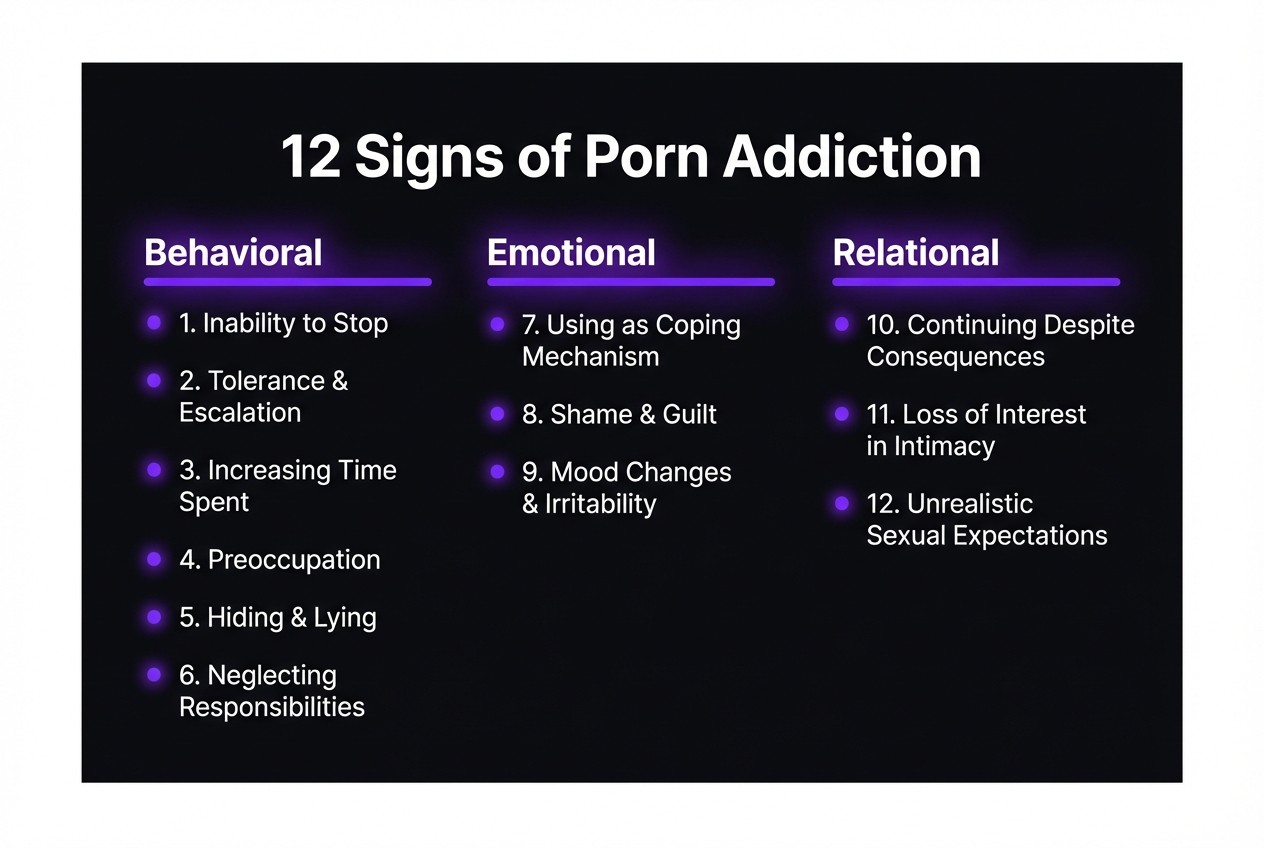
The signs of porn addiction, also called porn addiction symptoms, include inability to stop or cut back, tolerance and escalation to more extreme content, spending increasing amounts of time on pornography, preoccupation with pornography, using pornography as a coping mechanism, continuing despite negative consequences, hiding and lying about use, shame and guilt, mood changes and irritability, loss of interest in sexual intimacy, unrealistic sexual expectations, and neglecting responsibilities and social withdrawal. These 12 signs indicate that pornography use has become compulsive and is causing harm.
Porn addiction, also referred to as compulsive pornography use, is a behavioral pattern where an individual loses control over pornography consumption despite experiencing negative consequences. The World Health Organization recognized compulsive sexual behaviour disorder (CSBD) in the ICD-11 in 2019. Compulsive pornography use is the most common presentation of CSBD. An estimated 3% to 6% of adults experience compulsive sexual behavior.
The signs of porn addiction span behavioral, emotional, and relational domains. These signs often appear gradually and intensify over time. Not all signs need to be present for a person to have a pornography addiction. The defining features are loss of control and continued use despite harm.
The 12 signs of porn addiction are listed below:
Inability to stop or cut back — repeated failed attempts to reduce or quit pornography use despite wanting to stop.
Tolerance and escalation — needing more extreme, novel, or graphic content to achieve the same level of arousal or satisfaction.
Increasing time spent — spending progressively more time searching for, viewing, and thinking about pornographic content.
Preoccupation with pornography — persistent thoughts about pornography when not using it, including planning the next viewing session.
Using pornography as a coping mechanism — relying on pornography to manage stress, anxiety, loneliness, boredom, or other negative emotions.
Continuing despite negative consequences — maintaining pornography use despite relationship damage, work problems, financial strain, or declining health.
Hiding and lying about use — actively concealing pornography consumption from partners, family, or friends through deception and secrecy.
Shame and guilt — persistent feelings of shame, guilt, or self-loathing after using pornography, often creating a cycle of use and remorse.
Mood changes and irritability — increased irritability, anxiety, or restlessness when unable to access pornography or when attempting to stop.
Loss of interest in sexual intimacy — reduced desire for real-life sexual encounters, difficulty becoming aroused without pornography, or sexual dysfunction with partners.
Unrealistic sexual expectations — adopting distorted expectations about sexual behavior, body image, and partner performance based on pornographic content.
Neglecting responsibilities and social withdrawal — abandoning work, academic, or social obligations and pulling away from friends and family in favor of pornography use.
These signs of porn addiction are explained below.
Table Of Contents
1. Inability to Stop or Cut Back
Inability to stop or cut back on pornography use is the most defining sign of porn addiction. This sign directly matches the ICD-11 diagnostic criterion for compulsive sexual behaviour disorder: a persistent pattern of failure to control intense, repetitive sexual impulses or urges, resulting in repetitive sexual behaviour. The ICD-11 describes this pattern as persisting over an extended period of time (e.g., 6 months or more). The individual makes repeated attempts to reduce or quit but consistently returns to compulsive use.
The brain's dopamine reward system becomes conditioned through repeated pornography use. Stopping triggers cravings and discomfort that override the conscious intent to quit. The loss of control distinguishes addiction from regular pornography use. Frequency alone does not define porn addiction. The inability to moderate despite genuine effort does.
Failed attempts often produce a cycle of resolve to stop, short abstinence, relapse, deepened shame, and increased use.
2. Tolerance and Escalation to More Extreme Content
Tolerance and escalation to more extreme content is a sign of porn addiction where the individual needs increasingly graphic, novel, or taboo pornography to achieve the same level of arousal. The brain's reward system becomes less responsive through repeated overstimulation. This requires stronger stimulation to produce the same reward response.
The Coolidge effect amplifies this pattern. Each new sexual scenario triggers a fresh dopamine response, conditioning the brain to seek constant novelty. Over time, content that previously produced arousal no longer does. This drives escalation to more extreme material.
The escalation pattern parallels tolerance in substance addiction through similar neurological mechanisms. Tolerance and escalation are among the key reasons why pornography is addictive.
3. Spending Increasing Amounts of Time on Pornography
Spending increasing amounts of time on pornography is a sign of porn addiction where the individual devotes progressively more hours to searching for, viewing, and recovering from pornography use. Research by Al Cooper et al. (1999) found that individuals with compulsive online sexual behavior typically spend at least 11 to 12 hours per week fantasizing about and viewing pornography. Many addicted individuals spend double or triple this amount.
Time spent includes not only active viewing but also searching for specific content, revisiting previously viewed material, and recovering from extended sessions. The time investment often increases gradually. What begins as occasional use grows into multi-hour daily sessions.
Increasing time spent on pornography typically coincides with decreasing time spent on responsibilities, relationships, and previously enjoyed activities.
4. Preoccupation With Pornography
Preoccupation with pornography is a sign of porn addiction where the individual experiences persistent, intrusive thoughts about pornographic content when not using it. Preoccupation manifests as frequent thoughts about pornography during work, social interactions, or routine activities. The individual plans the next viewing session and has difficulty concentrating on tasks unrelated to pornography.
This sign reflects the brain's sensitized response to pornographic cues. The reward system has been conditioned to prioritize pornography-related stimuli over other activities.
Preoccupation is one of the three core criteria Certified Sex Addiction Therapists (CSATs) use for diagnosis: preoccupation to the point of obsession, loss of control, and negative life consequences.
5. Using Pornography as a Coping Mechanism
Using pornography as a coping mechanism is a sign of porn addiction where the individual relies on pornography to manage stress, anxiety, loneliness, depression, boredom, or other negative emotions. The individual turns to pornography not for sexual pleasure but for emotional escape. Pornography provides temporary relief from uncomfortable emotional states, and some users describe a trance-like, dissociative state during use.
This creates a dependency cycle. A negative emotion triggers pornography use for relief. Temporary dopamine elevation follows. The negative emotion returns, often worsened by guilt. The individual uses pornography again to manage the intensified distress.
Over time, pornography becomes the primary coping mechanism, displacing healthier alternatives such as exercise, social connection, or professional support. Using pornography to self-medicate emotional distress is one of the earliest signs of compulsive use transitioning into addiction.
6. Continuing to Use Pornography Despite Negative Consequences
Continuing to use pornography despite negative consequences is a sign of porn addiction where the individual maintains compulsive use even when it causes measurable harm. The ICD-11 criteria for compulsive sexual behaviour disorder include two related features: the person continues to engage in repetitive sexual behaviour despite adverse consequences, and the person continues even when deriving little or no satisfaction from it.
Negative consequences include relationship damage from discovery or emotional disconnection, declining performance at work or school, financial strain from paid content or lost productivity, and deteriorating mental health. The individual recognizes the harm but cannot translate that awareness into sustained behavioral change.
This distinguishes addiction from a problematic habit. In a habit, awareness of consequences produces change. In addiction, the compulsive drive overrides rational assessment. Consequences often accumulate gradually, with the individual minimizing or rationalizing each one in isolation.
7. Hiding and Lying About Pornography Use
Hiding and lying about pornography use is a sign of porn addiction where the individual actively conceals the extent of their consumption from partners, family, or friends. Common secrecy behaviors include deleting browser history, using private browsing, maintaining hidden folders or devices, lying about time spent online, and creating separate accounts.
The secrecy itself becomes part of the addictive cycle. Hiding the behavior allows it to continue unchecked. Partners who discover the hidden use often report emotional responses comparable to betrayal trauma.
Defensive reactions when confronted are closely associated with this sign. These reactions include anger, minimizing, and denial.
8. Shame and Guilt After Using Pornography
Shame and guilt after using pornography is a sign of porn addiction where the individual experiences persistent self-loathing, remorse, or disgust following each viewing session. The shame-use cycle operates in a predictable pattern. Pornography use produces temporary relief followed immediately by guilt and shame. The individual resolves to stop. Shame itself then becomes a trigger for seeking relief through pornography, producing relapse.
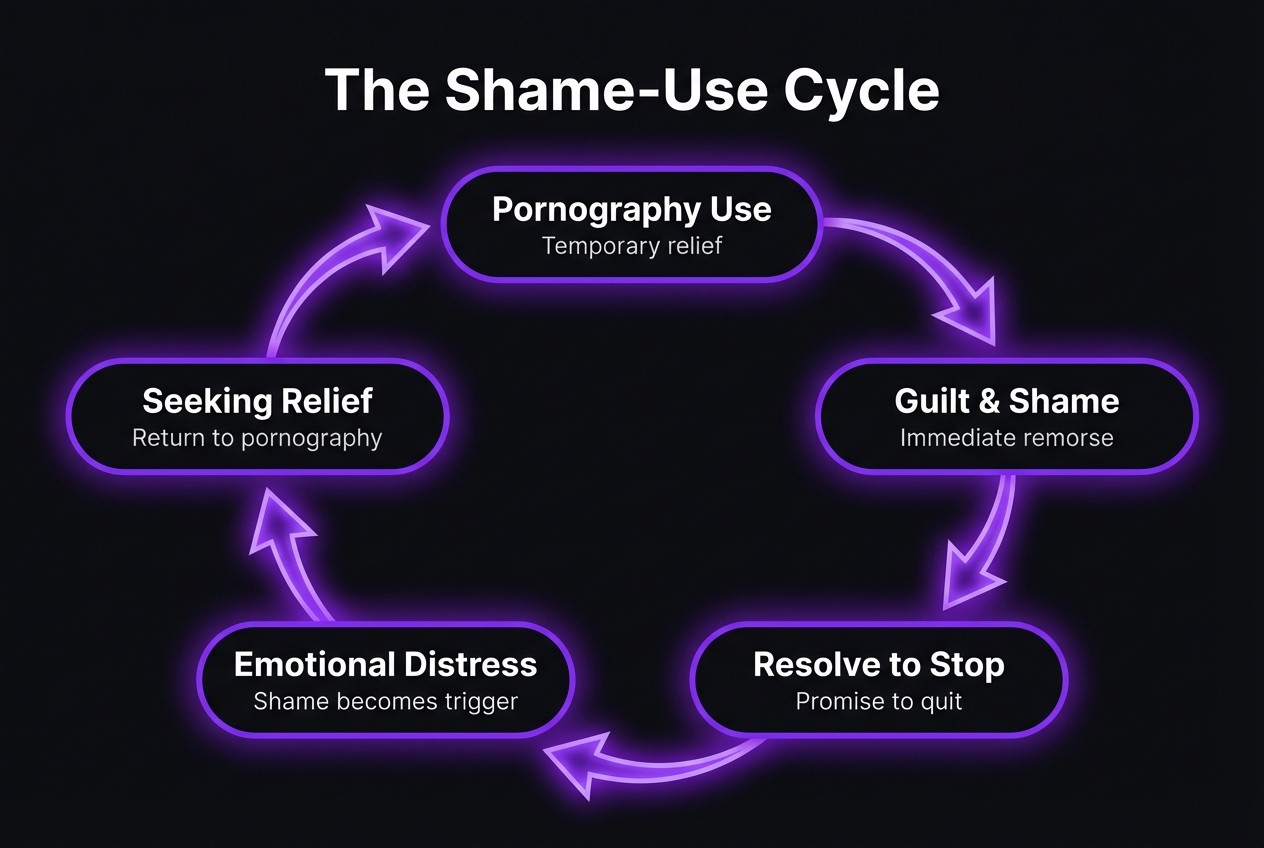
Chronic shame drives secrecy and contributes to depression and social isolation. The connection between pornography addiction and depression deepens through this cycle.
The "beat and delete" pattern is a common manifestation. The individual deletes entire pornography collections in a moment of resolve, then rebuilds them within days or weeks. Moral disapproval of pornography alone does not indicate addiction. The sign is persistent shame combined with continued compulsive use.
9. Mood Changes and Irritability
Mood changes and irritability are signs of porn addiction where the individual experiences increased agitation, anxiety, or restlessness when unable to access pornography or when attempting to stop. Desensitization of reward circuitry may contribute to anhedonia. Anhedonia is a decreased ability to feel pleasure from everyday activities, often accompanied by reduced motivation and diminished interest.
Restricted pornography access may produce withdrawal-like symptoms including irritability, restlessness, difficulty concentrating, and heightened anxiety, particularly in individuals with heavy use patterns. These mood changes oscillate between the highs of anticipation and use and the lows of post-use guilt and shame.
Partners and family members often notice personality changes before other signs become apparent. These changes include increased anger, decreased patience, and emotional distance.
10. Loss of Interest in Real-Life Sexual Intimacy
Loss of interest in real-life sexual intimacy is a sign of porn addiction where the individual experiences reduced desire for partnered sex, difficulty becoming aroused without pornography, or sexual dysfunction during real sexual encounters. The brain's reward system becomes conditioned to respond to screen-based visual stimulation rather than real sexual contact. The supernormal stimulation pornography provides can make real-life intimacy feel less rewarding by comparison.
Common manifestations include reduced libido for a real partner, inability to maintain arousal during partnered sex, delayed ejaculation, and difficulty reaching orgasm without pornographic stimulation.
Pornography-induced erectile dysfunction (PIED) is increasingly documented in young men. A survey by Professor Gunter de Win at the University of Antwerp, presented at the European Association of Urology congress in 2020, found that approximately 23% of men under 35 reported erectile dysfunction with a partner. Both the addicted individual and their partner experience the sexual impact. Partners report feeling inadequate, unattractive, and rejected.
11. Unrealistic Sexual Expectations
Unrealistic sexual expectations from pornography are a sign of porn addiction where the individual adopts distorted standards for sexual behavior, body image, and partner performance based on pornographic content. Pornography establishes templates for sexual encounters that do not reflect reality. These templates include exaggerated physical attributes, scripted scenarios, and performative behavior.
The addicted individual may pressure partners to replicate pornographic scenarios, causing discomfort, distress, and relationship conflict. Young men for whom pornography serves as their primary source of sexual education are particularly susceptible. They adopt what they observe online as the expected standard.
Dissatisfaction with real partners increases as the gap between pornographic expectations and reality widens.
12. Neglecting Responsibilities and Social Withdrawal
Neglecting responsibilities and social withdrawal are signs of porn addiction where the individual abandons work, academic, or social obligations and isolates from friends and family. Pornography consumption displaces time previously spent on career, education, hobbies, physical health, and social relationships.
Professional consequences include declining work performance, missed deadlines, disciplinary issues, or job loss from accessing pornography in inappropriate settings. Academic consequences include falling grades, missed classes, and withdrawal from campus life.
Social withdrawal follows the shame cycle. Shame drives the individual away from social connection. Isolation increases the time available for pornography use, which deepens the addiction. The accumulation of neglected responsibilities often triggers the moment of recognition, when consequences become severe enough to prompt self-assessment or outside intervention.
How Can You Tell If Someone Is Addicted to Porn?
You can tell if someone is addicted to porn by observing behavioral changes including increased secrecy, unexplained time spent alone with devices, mood changes, withdrawal from relationships, declining interest in intimacy, and defensiveness when the topic is raised. The most observable signs from an external perspective are secrecy and deception, mood changes and irritability, loss of interest in sexual intimacy, and neglecting responsibilities.
Many of these signs can also indicate depression, stress, or relationship problems. Direct, non-judgmental conversation is important before drawing conclusions.
What Causes Porn Addiction?
Several neurobiological, psychological, and environmental factors cause porn addiction. Pornography activates the mesolimbic dopamine pathway and is associated with tolerance and compulsive seeking behavior through similar reward circuitry as substance addiction.
Mental health conditions such as depression, anxiety, and trauma are commonly associated with compulsive pornography use, particularly when pornography serves as a coping mechanism. The Triple-A Engine, a model developed by Dr. Al Cooper (1998), identifies accessibility, affordability, and anonymity as the three factors driving the growth and appeal of online sexual activity. For a comprehensive guide, see causes of pornography addiction.
What Are the Effects of Porn Addiction?
The effects of porn addiction include measurable changes to brain structure and chemistry, mental health deterioration, relationship damage, and sexual dysfunction. Brain effects include reduced gray matter volume in the striatum and weakened prefrontal cortex connectivity, which explains how pornography affects the brain.
Mental health and relationship effects include increased depression, anxiety, trust erosion, emotional disconnection, and partner distress. Sexual effects include pornography-induced erectile dysfunction (PIED), reduced libido, and conditioned arousal patterns.
What Should You Do If You Have a Porn Addiction?
If you recognize the signs of porn addiction in yourself, you should seek professional help from a therapist specializing in compulsive sexual behaviour. The 12 signs listed above provide a framework for self-assessment.
Cognitive-behavioral therapy (CBT) and acceptance and commitment therapy (ACT) have shown promising results for compulsive sexual behavior. Explore the available treatment options for pornography addiction to find the right approach. QUITTR is a structured digital recovery program that combines daily accountability, urge management tools, and progress tracking to support individuals between therapy sessions. QUITTR helps users learn how to stop watching pornography through guided daily challenges that build the habits and coping strategies needed for sustained recovery.
Recovery from pornography addiction is possible. The brain's neuroplasticity allows conditioned patterns to change with sustained abstinence. Substance addiction research suggests meaningful neurological recovery can begin within weeks to months, and individual timelines vary based on duration and intensity of prior use. Prepare for the process by understanding pornography withdrawal symptoms and what pornography addiction recovery involves.

Ready to finally quit porn?
Start your journey with our porn addiction recovery app and become the best version of yourself. The benefits feel great, trust us - The QUITTR Team