
Is Edging Bad for You? Yes — Here's What It Does to Your Brain
Is edging bad for you? Yes — when it's repeated, prolonged, or paired with porn, edging is harmful to your brain, your dopamine system, and your recovery. Mainstream sources like Healthline and the Austin Urology Institute note that occasional edging between consenting partners isn't physically dangerous for healthy adults. The story changes the moment edging becomes a solo, porn-fueled, hours-long habit — which is exactly the pattern most men searching this question are stuck in.
Consider you're trying to quit smoking. You've cut down on nicotine and gone a few days without a cigarette. Then a craving hits, and instead of powering through, you light a cigarette and take a few puffs before putting it out. No big deal, right? But that "small" indulgence can set you back and lead to a full-blown relapse. The same logic applies to porn. When you quit, you'll have urges — and edging "a little" before quitting again does real damage to your recovery. This guide answers is NoFap edging bad for you directly, what it does to your brain, why it qualifies as a relapse, and how to stop. If you're serious about quitting, QUITTR is built for exactly this — including the edging behaviour most apps ignore.
Table of Contents
What Is Edging and Why Do People Do It?

Edging is the practice of stimulating yourself sexually until you reach the point just before orgasm, then stopping — and repeating that cycle, sometimes for hours. It's also called orgasm control, peaking, or surfing. Many people in the NoFap community recognize the term. It's not full abstinence. It's not standard masturbation (you may never finish). And it's not harmless — especially when used as a way to delay a porn relapse.
Why Are So Many People Edging?
The popularity of edging has exploded, especially among men trying to quit porn or take control of their sexuality. Here are the most common reasons people do it:
To "Feel the Pleasure Without the Guilt"
Many believe that if they don't ejaculate, it doesn't count as a relapse — so they edge for hours thinking it's a safe middle ground.
To Make Orgasms Feel Stronger
There's a belief that holding back climax makes the final orgasm more intense. While this may be accurate in the short term, the psychological cost is high.
As a Crutch While Quitting Porn
In recovery communities, some use edging as a coping mechanism to fight off the urge to fully relapse into porn or masturbation. It almost always backfires.
Out of Addiction to Arousal
Many edge not because they're in control, but because they're hooked on the dopamine rush of near-orgasm. They don't want to finish, but they don't want to stop. Long edging sessions — especially with porn — can last hours. Some users report losing 3, 4, or even 6 hours of their day, edging in secret, entirely consumed by the cycle of stimulation and self-restraint.
Edging Feels Like a Compromise — But It Isn't One
One of the biggest traps is thinking edging is a "middle ground." It feels like you're not fully giving in… but you're still keeping your brain deep inside the addiction loop. Every visual, every stroke, every second spent edging trains your brain to crave porn, fantasy, and constant stimulation — without satisfaction. You're not rewiring your brain. You're reinforcing the very pathways you're trying to escape.
Is Edging Physically or Mentally Harmful?

Is edging harmful? In moderation between partners, generally no. As a solo, porn-driven, hours-long compulsion, yes — edging is harmful to your dopamine system, mood stability, and recovery. The result is a buildup of mental strain, chemical imbalance, and emotional instability that most people don't fully understand until they're deep in it. Below is the hidden damage edging does, focused on mental health and brain chemistry.
Edging Floods Your Brain With Dopamine Until It Crashes
Edging — especially with porn — triggers your brain's reward center over and over again without resolution. That's why "is edging bad for dopamine" is one of the most common follow-up questions on this topic.
This means
Repeated surges of dopamine, the brain's pleasure and craving chemical
Extended states of arousal and anticipation
No natural reset or release through climax
A short-term high that feels good in the moment
A sharp crash once you stop, leaving you emotionally drained, foggy, anxious, or depressed
One Reddit user, Head-Sun5772, said it best
"Edging is worse than masturbating. You keep flooding your brain with dopamine for a LONG time. The crash is much worse afterwards leaving you depressed almost. DO NOT EDGE!" This isn't just emotional — it's biochemical. Your brain cannot sustain that level of stimulation indefinitely. Once it drops, you may feel hollow, irritated, or unmotivated for the rest of the day.
It Trains Your Brain to Stay in Addiction Mode
Edging isn't neutral. It doesn't help you quit — it conditions your brain to stay in the addiction cycle. Why? Because your mind still associates arousal with constant stimulation, fantasy, porn cues, or forbidden behavior.
This means
You're reinforcing the same neural pathways that porn builds
You're increasing your tolerance, which leads to escalation
You're lowering your ability to focus on real-world tasks or relationships
Reddit user UrbsNomen summed it up bluntly
"Yes, it's much worse for both mental and physical health. I can say that as a person who was addicted to edging." That's the common arc across recovery spaces: people start edging to avoid relapsing — and end up addicted to edging itself, trapped in a gray zone that's harder to escape than the original habit.
The Mental Health Effects Can Sneak Up On You
Some people think that because they didn't orgasm, it "doesn't count." But mentally, you're still spending hours feeding urges, battling shame, avoiding responsibility, and reinforcing guilt.
This can lead to
Increased anxiety and restlessness
Crippling brain fog and lack of clarity
Mood swings or emotional flatness (often called "flatlining")
Decreased self-respect and constant internal conflict
One Redditor, Cahir101, put it harshly but honestly
"Edging destroys your mind and soul and is more addictive than just PMO. Stop it." The longer you stay in this cycle, the harder it becomes to feel present, satisfied, or mentally at peace. You may still go to work, socialize, or smile — but inside, you'll feel disconnected, like a part of you is constantly hiding something.
It Undermines Real Recovery
If you're trying to quit porn and take back control of your life, edging is not your ally. It's a slow relapse machine — training your brain to stay addicted while you tell yourself you're "doing better." This is why tools like QUITTR recommend complete abstinence — not just from porn, but from edging too.
QUITTR helps users
Track real clean streaks (not half-measures)
Recognize and avoid edging triggers
Break the cycle with tools like the Panic Button and recovery lessons
Reconnect with others who've fought and won the same battle
If you're serious about quitting, edging is not neutral. It's a trap.
5 Reasons Why Edging Keeps You Stuck (And Makes Recovery Harder)

Edging Isn't Progress — It's a Trap
A lot of people trying to quit porn fall into the same trap: they cut out full relapses but keep edging, thinking it's a safe middle ground. No orgasm, no problem, right? Wrong. Edging is one of the most deceptive obstacles in porn recovery — because it feels like progress while it's keeping you stuck.
It Rewires Your Brain Around Fantasy, Not Freedom
Every time you edge — especially while consuming sexual material — your brain gets flooded with dopamine. And the worst part? You're training it to chase pleasure without resolution. This creates intense craving loops. Your mind gets addicted to stimulation, not intimacy. You're reinforcing neural pathways that lead straight back to porn. Even if you don't climax, your brain still treats the session like a binge. You're not breaking the habit — you're reinforcing it. Apps like QUITTR address this with focused dopamine recovery plans, including lessons that explain why edging is neurologically identical to a soft relapse. The platform helps you build mental rewiring, not just streaks that look clean on paper.
It Creates False Confidence (That Breaks Fast)
You might think you've "beaten the urge" because you didn't finish… But edging is like hovering on the edge of a cliff and calling it safety. The truth? One unexpected trigger can push you into full relapse. You spend hours in high-risk states, thinking you're strong — until you're not. Your body is tense, your mind is obsessed, and your willpower gets worn down quietly. Many users inside QUITTR's support groups report this exact pattern: they stay "clean" for a while through edging, then fall harder than before, because they never truly stepped away from the addiction cycle.
It Delays Real Emotional Healing
When you're edging regularly, you're still feeding your emotional dependency on sexual escape. This keeps you from confronting emotional triggers, building new and meaningful coping mechanisms, and developing intimacy outside of sexual fantasy. You're numbing, not growing. Recovery requires building self-worth, learning to sit with uncomfortable emotions, and breaking the cycle of dopamine dependence. That's why QUITTR includes blockers and streak counters, reflection tools, journals, and meditation exercises to help you confront the why, not just stop the what.
It Worsens Flatline, Brain Fog, and Depression
The longer you edge, the more burnt out your dopamine system becomes. Your receptors start to dull. Your highs fade. Eventually everything — even the edging — feels flat. This leads to emotional numbness, low energy and drive, foggy thinking, and sudden depression or anxiety spikes. And because you haven't broken the pattern fully, your brain doesn't get the clean break it needs to restore balance. Real dopamine detox takes complete abstinence. Edging keeps trickling the poison in, day after day.
It Makes Full Recovery Feel Impossible
Edging blurs the line between clean and not clean. You stay stuck in the gray zone — not relapsing, but not free. This confusion kills motivation. You don't feel the real rewards of recovery. You don't trust your progress. You start to believe maybe you're just "broken." But you're not broken. You're just stuck in a loop that only full commitment can break. Recovery platforms like QUITTR are built to help you escape this loop — not by shaming you, but by helping you reset, reflect, and rebuild from the inside out.
How to Finally Quit Edging (For Real This Time)

Edging Isn't Just a Tease — It's a Serious Relapse Risk
If you've tried quitting porn before, you already know: edging is the silent killer of your progress. It doesn't feel like a full relapse, but it keeps you stuck in the same addictive cycle — just slower and quieter. When you edge, you're not "kind of" clean. You're still on the same neural pathways as before, just feeding them smaller doses. And your brain doesn't forget. If you keep dancing with temptation, you'll keep falling.
Commit to Full Abstinence — No More Middle Ground
Start with a clean mental line: "I don't do porn. I don't edge. I'm done." That kind of decision changes everything. Apps like QUITTR are built around full abstinence tracking, not streaks that ignore edging. The app helps you define a clean start, set your commitment level, and track tangible progress (not fake "kind of clean" wins).
Use Real-Time Tools to Interrupt the Urge Cycle
Edging urges come fast, subtle, and in moments of boredom, loneliness, or emotional stress. You need a fast, effective way to break the mental loop before it takes over. That's why QUITTR includes:
A Panic Button for instant help when you feel like slipping
Meditation exercises to redirect your mind
Quick journaling prompts to reconnect with your values
Relaxation sounds to ground you again
These tools are lifelines — not to push the urges away, but to give your brain something better to do now.
Eliminate Triggers Ruthlessly
If you're serious about quitting edging, build an environment that makes relapse harder, not easier. That means:
Deleting all sexually stimulating images and saved content
Installing a potent content blocker (QUITTR has one explicitly designed to bypass the usual loopholes)
Moving your phone or laptop out of the bedroom
Avoiding even "harmless" social media scrolling that stirs fantasy
QUITTR's advanced content blocker is built for this exact purpose — closing the gaps that traditional blockers miss and helping you create a clean space for recovery.
Rewire Your Brain With Healthy Rewards
You edge because your brain wants dopamine. So instead of relying on artificial pleasure, retrain it to crave real-life rewards. Here's how:
Start a streak inside QUITTR and aim for personal milestones (3 days, 7 days, 14, 30…)
Use the life tree feature to visualize your growth — every clean day, your "tree" grows stronger
Replace edge-time with challenging habits: workout, cold shower, journaling, deep work
Track your progress and celebrate small wins (even if it's just "I didn't edge today")
Over time, your brain will start chasing these new reward systems instead of the destructive ones that used to control you.
Join a Real Recovery Community
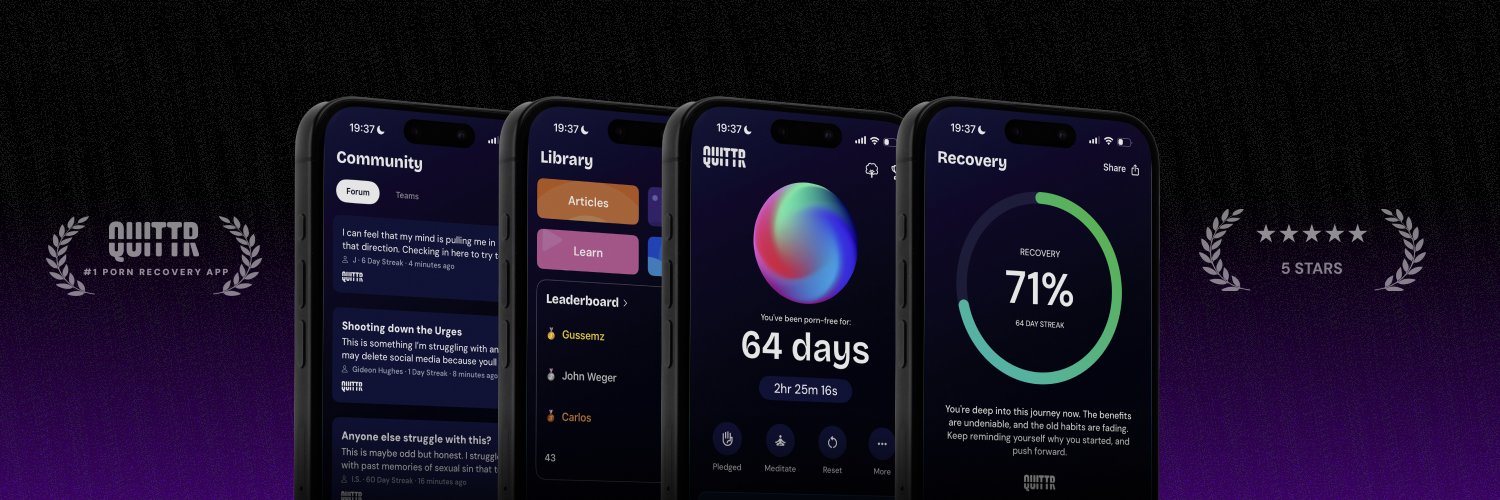
Isolation is where edging thrives. Shame grows in silence. Relapse sneaks in when no one's watching. That's why QUITTR's community feature is essential. Inside the app, you can chat with others on the same path, join streak-based leaderboards for motivation, ask for help anonymously when you're struggling, and learn from people who've made it to 30, 60, 90, and even 365 days clean. Seeing others win proves you can win too. And when you slip, having people to catch you changes everything.
Edging FAQ: Quick Answers to the Questions You're Actually Searching
Is edging bad for your brain?
Yes — repeated edging, especially with porn, is bad for your brain. It keeps the dopamine reward circuit firing without a natural reset point, conditioning your brain to crave novel sexual stimulation. Over weeks and months, this contributes to brain fog, low motivation, and difficulty feeling pleasure from ordinary activities — a state recovery communities call "dopamine downregulation."
Is edging bad for dopamine?
Yes — long edging sessions release more total dopamine than a normal masturbation session, because the brain stays in anticipation mode for hours. The crash afterward is correspondingly harder, which is why many men report depression, irritability, and brain fog the day after an edging binge.
Is edging a relapse?
If you're in porn recovery or doing NoFap, yes — edging is a relapse. The "no orgasm = no relapse" rule misses the point of recovery, which is rewiring the brain away from compulsive sexual stimulation. Edging keeps every other element of the addiction loop intact: porn, fantasy, dopamine flooding, secrecy, time loss. Most serious NoFap counters reset on edging for that reason.
Is edging as bad as gooning?
Gooning is the more extreme version of edging — sustained, trance-like edging sessions designed to maximize the dopamine state. Both behaviors operate on the same neural mechanism. Edging is the gateway pattern. Gooning is what edging becomes when tolerance builds. From a recovery standpoint, both are relapses.
Is edging for 2 hours healthy?
No. Multi-hour edging sessions are the textbook signature of compulsive use, not technique. The Sexual Medicine Society of North America describes orgasm control as a brief practice during partnered sex — not a solo, screen-based marathon. If you're regularly edging for an hour or more, you're not practicing a technique. You're describing an edging addiction.
Is edging bad for testosterone?
Edging is not inherently bad for testosterone in healthy men, according to Victory Men's Health. Chronic stress, poor sleep, and the depression that follows long edging sessions, however, can all suppress testosterone indirectly — so the second-order effects still matter.
Is edging bad for your pelvic floor?
Frequent edging can overactivate your pelvic floor muscles, leading to tension, pain, or urinary discomfort over time. This is one of the few clearly documented physical risks of prolonged edging and is well-recognized in urology — see the Austin Urology Institute's overview of edging risks.
How do I stop an edging addiction?
Treat it like any other compulsive sexual behavior: full abstinence, environmental redesign, a hard streak counter that resets on edging, and a community that holds you accountable. The five-step framework above (commit, interrupt, eliminate triggers, rewire rewards, join community) is the same protocol QUITTR uses inside the app.
Quit Porn and Edging for Good with QUITTR
Research on edging is limited, and there's still a lot we don't know about how the practice affects the brain and body long-term. What's clear from the literature on orgasm, dopamine, and compulsive sexual behavior is that delaying ejaculation for hours, repeatedly, while consuming porn, is not the same as a brief partnered technique. One study found that delayed ejaculation can lead to adverse psychological effects and interfere with sexual functioning. Other research has linked prolonged sexual arousal to increased risk of chronic pelvic pain. Effects vary, but the recovery-relevant verdict is consistent: edging in the way most men in NoFap describe it is harmful.
QUITTR is a science-based and actionable way to quit porn — and edging — forever. The app combines practical tools with supportive features: an AI-powered support system, community leaderboards, meditation exercises, and progress tracking. Essential features include a content blocker, streak tracker, AI Therapist, recovery journal, leaderboard, meditation games, lessons, education, relaxing sounds, side-effect awareness, life tree features, and more. Whether you're seeking support, education, or practical tools to quit porn forever, QUITTR offers a private, understanding space to work toward your personal goals. Try the #1 science-based way to stop porn by joining the 28-day challenge and competing with other people for the longest streak.