
Masturbation: What Is It, Benefits, Frequency, and Side Effects
QUITTR is the #1 porn quitting app in the world. Join 1,000,000+ others on a mission to be the best person they can be.

Last Edited
Masturbation is the act of touching your own body, usually the private parts, to feel sexual pleasure and reach an orgasm. Medical organizations recognize masturbation as a normal and healthy part of human sexuality.
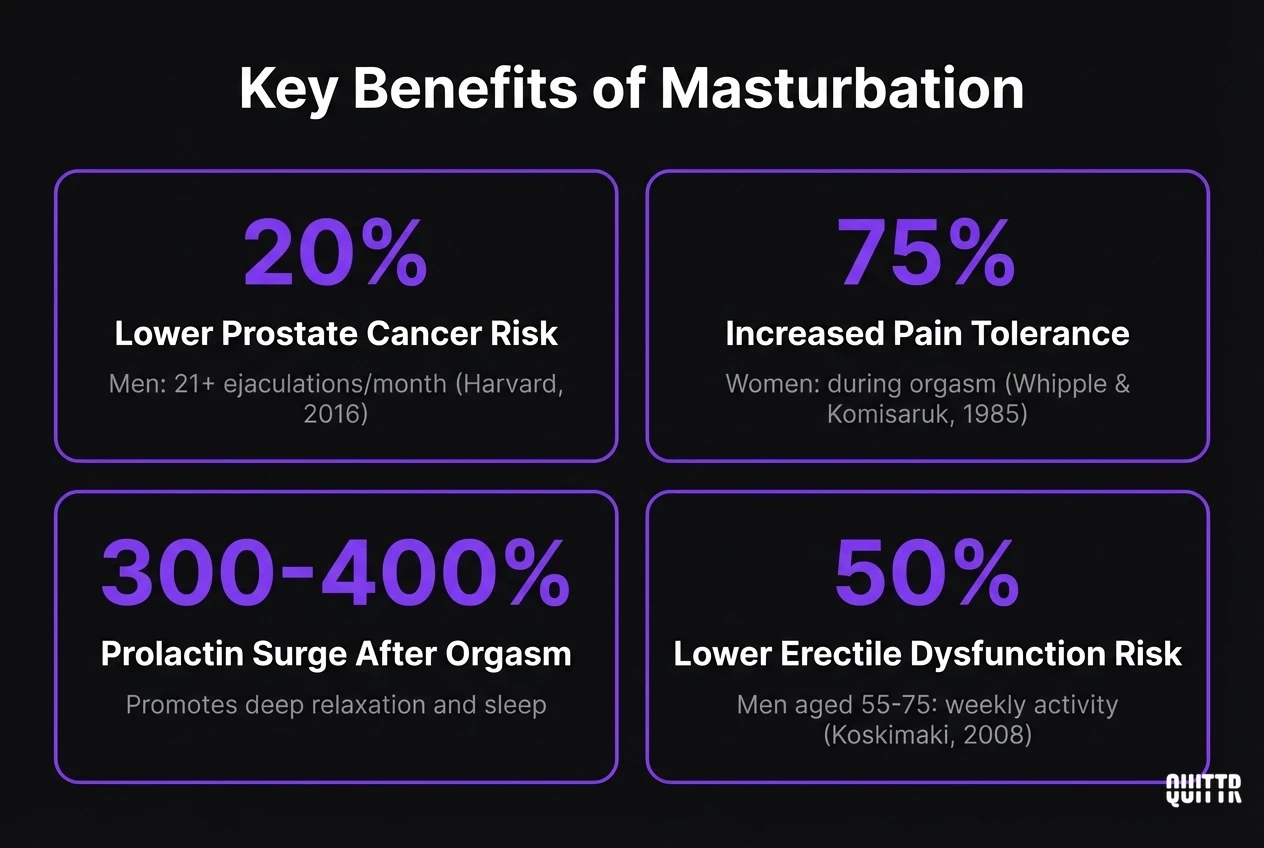
Masturbating to climax results in dopamine spikes that quickly provide feelings of happiness and relaxation. For men, a 2016 Harvard study found that ejaculating 21 or more times per month is associated with approximately 20% lower risk of prostate cancer. For women, a 1985 study published in the journal Pain found that orgasm can increase pain tolerance by approximately 75%.
However, masturbating too much can cause side effects like skin chafing or temporary numbness. It can become a serious issue when the brain gets too used to the dopamine rush, leading to compulsive masturbation and disruptions to your daily life.
Online communities like NoFap are available to help with compulsive masturbation, allowing you to step away from the habit and give your body time to heal. The healing period also allows your brain's chemical levels to return to balance. You can also download the QUITTR app, which is designed to help you stop watching porn and regain balance in your daily life.
What Is Masturbation?
Masturbation is the act of touching your own body to feel sexual pleasure and reach an orgasm. Masturbation for men usually involves rubbing or stroking the penis until semen is released. Masturbation for women typically involves rubbing the clitoris, vulva, or penetrating the vagina with fingers or a sex toy until climax is achieved.
The word masturbation derives from the Latin verb masturbari. The origin is uncertain, but one widely cited theory traces it to manus (hand) and stuprare (to defile). The medical view of masturbation as a disease emerged in the early 18th century, notably with the anonymous pamphlet Onania (c. 1716) and Tissot's L'Onanisme (1760).
Men usually masturbate from random physical changes, like waking up with an erection (morning wood) or seeing something sexual. Masturbation can sometimes be initiated by men after viewing pornography.
Women may also be stimulated to masturbate as an effect of watching porn. They may also masturbate to relax, and fall asleep more effortlessly, or ease period cramps.
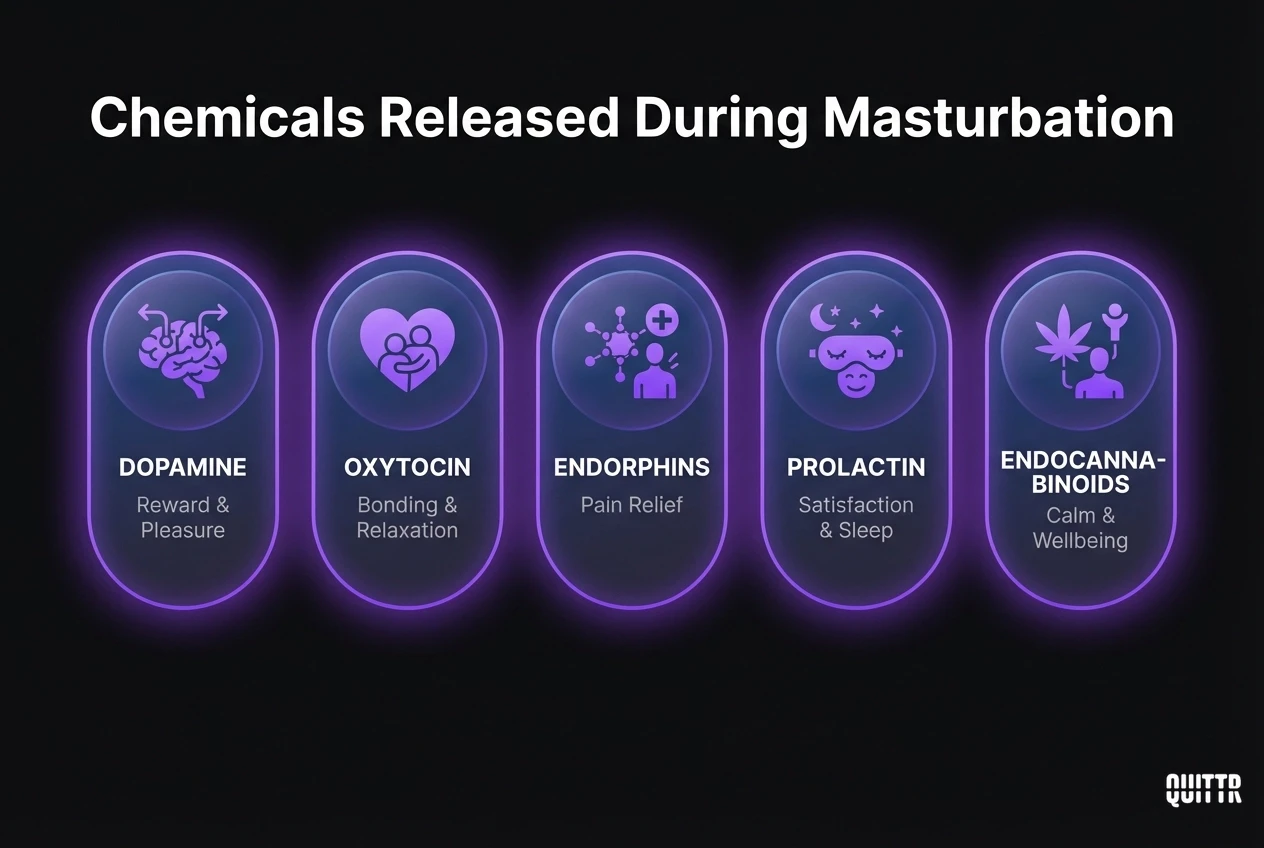
Masturbation in both men and women triggers the release of several "happy" hormones and neurotransmitters, primarily during arousal and orgasm, to enhance pleasure and reduce stress. Key chemicals that the body releases into itself before, during and after masturbation include dopamine (reward/pleasure), oxytocin (bonding/relaxation), endorphins (pain relief), prolactin (satisfaction), and endocannabinoids. Because masturbation triggers the release of dopamine in the brain, it helps you feel relaxed and happy.
Masturbation in men results in the release of semen, followed by a recovery period where they may feel sleepy. During the masturbation recovery phase, it is typically physiologically difficult or impossible for males to have additional orgasms.
Women who climax during masturbation feel rhythmic pulses followed by feelings of relaxation. These feelings are a natural, physiological response to sexual arousal and orgasm.
Masturbation Techniques
Masturbation techniques differ between men and women primarily because of their different body structures. There are some common masturbation methods, but everyone may have personal preferences.
In men, masturbation techniques generally involve using the hand to stroke or rub up and down the penis shaft. This stroking can be aided by lubricants to ease friction and make masturbation more comfortable. Some men also use adult toys, such as a sleeve, to simulate the feeling of real sex. They may also masturbate by lying face-down on a mattress and rubbing their genitals against the mattress or a pillow.
In women, masturbation techniques mainly involve rubbing the clitoris, which can be done with gentle massages of the clitoris or circling the area with fingers. Some women combine clitoral rubbing with vaginal penetration using their fingers or a sex toy like a vibrator. Women can also masturbate by rubbing their genital areas against a pillow or bolster.
What Are The Benefits Of Masturbation?
There are several measurable benefits of masturbation. Masturbation engages multiple body systems, including the cardiovascular, endocrine, and nervous systems. The engagement of the cardiovascular system helps the body transport nutrients and blood through the body. The engagement of the endocrine system helps regulate metabolism and growth in several parts of the body. The engagement of the nervous system helps coordinate bodily actions.
For men, masturbation helps flush and maintain the prostate gland, which produces prostatic fluid that makes up about 20 to 30% of the volume of semen. This process is associated with a lower risk of prostate cancer.
For women, the main benefit of masturbation is that it naturally relieves localized pain, such as that from menstrual cramps. Orgasm also engages the pelvic floor muscles and may help maintain vaginal elasticity and lubrication.
Below, we provide a broader list of the psychological, neurophysiological, physical, and sexual benefits of masturbation:
Prolactin surge: Following climax, the brain releases a surge of prolactin. Research shows prolactin levels increase by 300 to 400% after orgasm. This hormonal surge is associated with post-orgasm sleepiness.
Prostate health (Men): A 2016 study from Harvard T.H. Chan School of Public Health (Rider et al., European Urology) found that men who ejaculated 21 or more times per month had approximately 20% lower relative risk of developing prostate cancer compared to men who ejaculated 4 to 7 times per month.
Natural pain relief (Women): A 1985 study by Whipple and Komisaruk, published in the journal Pain, found that vaginal self-stimulation increased pain tolerance by approximately 40% without orgasm and by approximately 75% during orgasm.
Pelvic floor conditioning: Orgasm involves involuntary contractions of the pelvic floor muscles. Research suggests that regular orgasms may complement pelvic floor exercises in maintaining muscle tone.
Long-term sexual function: A 2008 Finnish study (Koskimaki et al., The American Journal of Medicine) found that men aged 55 to 75 who had sexual intercourse at least once per week had roughly half the incidence of erectile dysfunction. In postmenopausal women, regular sexual activity including masturbation is associated with less vaginal atrophy.
Is It Healthy To Masturbate Once A Week?
Yes, it is healthy to masturbate once a week. By masturbating once a week, you are providing your body with a natural way to relieve tension and boost your mood. For men, masturbating weekly helps keep the reproductive system active and clears old fluid from the prostate gland. For women, sexual arousal and orgasm temporarily increase blood flow to the pelvic area. Masturbation may also help reduce stress through the release of endorphins and oxytocin.
Masturbating once a week provides long-term health benefits with no proven negative physical effects. Research suggests that the protective association with prostate cancer becomes significant at 13 or more ejaculations per month. In postmenopausal women, regular sexual activity including masturbation is associated with better vaginal tissue health.
Is It Healthy To Masturbate Every Day?
Yes, masturbating every day can be healthy for most people, as long as it does not take over their daily schedule or cause physical pain. In men, a 2016 Harvard study found that ejaculating 21 or more times per month is associated with approximately 20% lower risk of prostate cancer. In women, masturbating daily can clear away stress and trigger the release of sleep-inducing hormones.
Daily masturbation may cause some physical side effects, especially if you're too rough or masturbate for too long. Examples of side effects from daily masturbation include skin irritation and swelling.
Men who masturbate daily may also face issues with delayed ejaculation, which makes it hard to climax with a real partner. One contributing factor to delayed ejaculation is habituation to a specific grip or speed during masturbation. This pattern is sometimes called idiosyncratic masturbatory style.
Women who masturbate daily may find their clitoris becoming too sore or temporarily numbed. This soreness or numbing is typically caused by the over-stimulation of the clitoris, which contains more than 10,000 nerve fibers according to a 2022 study by Oregon Health and Science University.
Masturbating daily can also carry psychological risks if it becomes compulsive. Compulsive masturbation is a behavioral addiction, where masturbation becomes an uncontrollable habit that interferes with daily life.
What Are The Side Effects Of Excessive Masturbation?
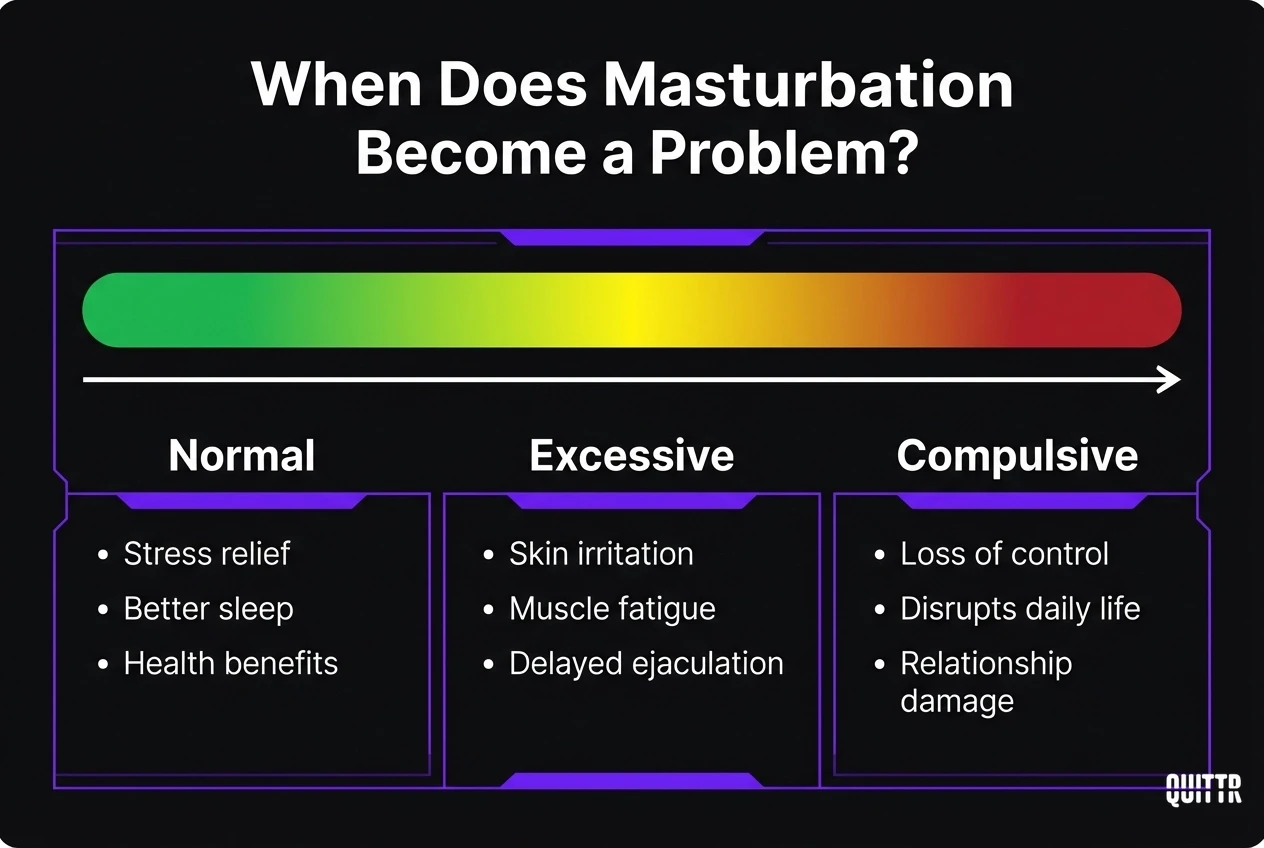
The side effects of masturbating too much can be physical, mental, and sexual. The main physical side effect is a risk of skin irritation. The psychological and sexual side effects are risks associated with compulsion or using overly intense methods.
For men, the most common side effects are soreness of the penis and difficulty in climaxing with a real partner. For women, the primary side effects are making the clitoris sore or temporarily numb, especially if they use high-speed vibrators too frequently.
Here is a list of possible side effects from excessive masturbation:
Skin irritation: Minor skin irritation from friction typically requires several days to a week of rest to fully heal.
Muscle fatigue: Masters and Johnson documented involuntary muscle tension and spasms, called myotonia, as a normal physiological response during sexual arousal and orgasm.
Dopamine dependency: A 2014 study by Kuhn and Gallinat found that higher pornography consumption correlated with reduced reward system activity. There is no direct evidence that normal-frequency masturbation causes lasting dopamine changes.
Compulsive masturbation: Clinical literature estimates that roughly 3% to 6% of adults struggle with compulsive sexual behavior, a figure widely cited since the work of Patrick Carnes in the early 1990s.
Delayed ejaculation: For desensitization from aggressive masturbation technique, some clinicians recommend a temporary break combined with behavioral retraining. The duration varies by individual and is not standardized.
Vibrator numbness: A 2009 study by Herbenick et al. in the Journal of Sexual Medicine found that approximately 16.5% of vibrator users reported temporary genital numbness. The majority (71.5%) reported no side effects.
What Are The Myths About Masturbation?
There are many myths about masturbation, but facts often show that many of these myths are untrue or exaggerated. Below is a list of myths about masturbation and the facts that disprove them:
Masturbation causes physical problems: There is no medical proof that masturbation causes physical issues like blindness, hair loss, or stunted growth.
Masturbation causes infertility in men: The male body constantly produces millions of new sperm every single day.
Only lonely people masturbate: Multiple national surveys consistently find that a majority of married men (57 to 77%) and a substantial proportion of married women (37 to 48%) report masturbating, even those in satisfying relationships.
When Does Masturbation Cause Problems In Life?
Masturbation can cause problems in life when it stops being a healthy way to relax and becomes a compulsive habit. As a compulsive habit, masturbation can cause physical pain, destroy emotional connections with partners, or occupy so much time that you end up neglecting school, work, or friends.
For men, the most common problem masturbation causes in life is numbing the body to normal, gentle touches. This numbing makes it difficult for men to get an erection or reach a climax when having sex with a real partner.
For women, the main issue masturbation causes in life is the acclimatization to the buzzing of vibrators. When this acclimatization happens, normal, soft intimacy with a partner can feel frustrating or simply not enough.
What Is NoFap?
NoFap is an online community and support group for people who wish to abstain from pornography, and often masturbation, for a set period of time. The most well-known NoFap challenge is 90 days. The main goal of those joining NoFap is to heal their brains and take back control over their daily habits. The most significant part of the NoFap journey is the fight against compulsive masturbation, which is the uncontrollable urge to masturbate even if it disrupts daily functions.
What Are The Benefits Of Not Masturbating?
The benefits of not masturbating are mainly about giving your body and brain a much-needed break to heal. This healing is especially crucial if masturbation has become an uncontrollable habit that interferes with daily life.
For men, not masturbating can create a sharp, temporary boost in testosterone and help restore physical sensitivity. A 2003 study of 28 men (Jiang et al., Journal of Zhejiang University Science) found that serum testosterone temporarily reached approximately 146% of baseline on the 7th day of abstinence, before returning to normal levels. This finding has not been replicated in larger studies.
For women, not masturbating gives the nerves in the clitoris time to rest and restores the ability to enjoy a gentle, human touch. Studies in the Journal of Sexual Medicine indicate that not masturbating allows the sensory nerves around the clitoral area to heal and regain sensitivity to gentle touches.
When Should You Stop Masturbating?
You should stop masturbating when it stops being a normal, healthy way to relax and starts causing physical pain, hurts real-life relationships, or interrupts your daily responsibilities.
Physical pain caused by masturbation is indicated by cuts, swelling, or chafing on your genitals. The hurt in your real-life relationships happens when you neglect your partner in preference for masturbation. The interruption of daily responsibilities happens as time spent masturbating leads to you skipping work or school and ignoring your friends.
Can Viewing Porn Trigger Masturbation?
Yes, viewing porn can trigger masturbation. By viewing porn, you are flooding your brain with strong visual signals that make you feel sexually excited. The brain begins processing visual sexual content within approximately 150 to 200 milliseconds. This visual processing activates the brain's reward circuitry, triggering dopamine release. This rush of dopamine pushes your body to crave a physical release to match the intensity of what you see on the screen, resulting in a strong urge to masturbate.
What Is Masturbation Addiction?
Masturbation addiction, also known as compulsive masturbation, is a behavioral addiction where you have an uncontrollable urge to self-stimulate. The compulsiveness in masturbation addiction can lead to a disruption in your daily life.
Your body gradually becomes accustomed to the easy rush of dopamine that happens during masturbation. Because of this acclimatization, masturbation becomes a default action, even at the potential expense of physical health, relationships, or daily responsibilities.
A Note From QUITTR
Masturbation is a completely normal way for people to touch their own bodies to feel pleasure and reach a climax. When done in moderation, masturbation is associated with health benefits, such as a lower risk of prostate cancer in men and increased pain tolerance of up to 75% in women during orgasm.
However, masturbating too much can cause side effects like painful skin irritation and temporarily numb the physical nerves. Masturbating can become a serious issue when it becomes compulsive masturbation, where there is a loss of control and disruption to daily life.
We believe that frequent masturbation eventually can lead to porn addiction in some people. If you feel like your masturbation becomes too frequent, download our app. The QUITTR app is a masturbation addiction recovery app built to help you stop masturbating. The app provides the structured guidance needed to successfully complete a reset period, allowing your brain's chemical levels to balance out so you can regain your natural sensitivity, focus on your daily goals, and fix your sex life after porn addiction.