Covenant Eyes Review 2026: Features, Pricing, Pros & Cons
Covenant Eyes is accountability software for porn addiction recovery that takes blurred screenshots, scans them with AI for explicit content, and emails a flagged-activity report to a trusted accountability partner, according to the Covenant Eyes product documentation. It runs on Windows, macOS, Android, iOS, and iPadOS, costs $17.99/month for an individual plan, and is built for users who want a human-in-the-loop instead of a silent porn blocker. This Covenant Eyes review covers screen accountability, filtering, the accountability report, family plan options, privacy, pricing, pros and cons, and a direct verdict on whether it's worth it in 2026.
Table of Contents
What Is Covenant Eyes & How Does It Work?

Covenant Eyes is an accountability software for porn addiction recovery that pairs device-level monitoring with a human accountability partner instead of relying on a silent porn blocker. The app captures blurred screenshots, scans them with on-device AI for explicit content, and emails the flagged events to the person you choose as your ally. The product has operated since 2000 and currently reports more than 1 million members across its individual, couple, and family plans.
Covenant Eyes as an Accountability System
Covenant Eyes is built around accountability rather than just blocking. Many porn blocker apps stop access to adult sites. This app adds a human element. You choose an accountability partner who receives regular accountability reports showing flagged activity or patterns in screen use. That visibility changes behavior because people stop hiding what they do online. Who do you trust to hold you accountable when temptation shows up?
How Covenant Eyes Works
The software runs quietly on your device and focuses on what you do on screen. On Android, Windows, and Mac, it captures frequent screenshots. AI blurs those images, so they are not crystal clear; yet, the system can still detect adult or explicit content. When the algorithm detects risky content, it flags the event and records contextual information, such as time and frequency, for the accountability report. That report goes to the accountability partner you select. The goal is not to shame but to create a moment of pause and a chance for honest conversation after a slip or pattern of use appears.
What the App Monitors
Covenant Eyes focuses on content monitoring and porn use tracking rather than full surveillance. Screenshots are blurred, and the emphasis is on identifying adult content and problematic thumbnails. The app flags sites, images, and risky video thumbnails instead of capturing readable private messages. Accountability reports highlight trends and specific flagged events, giving your partner enough detail to support recovery without exposing everything on your screen. How comfortable would you feel sharing that kind of filtered report with someone who cares about your growth?
Which Devices Get Full Protection and Which Do Not?
Windows and Mac receive strong monitoring capabilities, including frequent screenshot monitoring and robust detection. Android also supports full-screen monitoring and matched screenshot checks. iPhone and iPad face limitations because of Apple platform restrictions. On iOS, Covenant Eyes can monitor Safari best, but third-party apps like Chrome, YouTube, TikTok, and many social networks cannot be fully monitored. That gap means iPhone users often pair the app with regular accountability conversations or additional willpower strategies. Do you use an Android device or an iOS device? Your device choice affects how the accountability software protects you.
Why People Choose Covenant Eyes
Users include people working on porn addiction recovery, couples trying to rebuild trust, parents setting parental controls, students wanting focus, and church groups offering accountability. Some install it to protect kids with family protection and content monitoring. Others value the accountability partner feature when facing compulsive porn habits or secretive screen behavior. Accountability software appeals to those who accept that technology alone cannot change habits. Who in your life would make an accountability report meaningful and supportive?
Why Accountability Beats Simple Blocking
Blocking can stop access, but it leaves secrecy intact. Accountability breaks secrecy by making your internet accountability visible to someone who supports your recovery goals. That transparency reduces shame and increases self-awareness. When flags are sent to an accountability partner, conversations can focus on repair and habit change instead of blame. Users report fewer relapses when they combine the app with recovery tools like counseling, habit tracking, and intentional offline routines. What combination of tools would support your goal to stop compulsive porn use and rebuild trust?
6 Key Features of Covenant Eyes

1. Screen Accountability
Covenant Eyes uses blurred screenshot monitoring and AI analysis to flag explicit images or videos that appear on your display. It snaps blurred frames at intervals and runs pattern recognition to detect sexual content, whether you're in a browser, watching a video app, or scrolling a messaging thread. That method closes common loopholes where users rely on nontraditional sources like YouTube clips or DMs to avoid detection. How would a system that checks full-screen content change the way you handle triggers?
2. Accountability Reports
Every flagged event becomes part of a secure accountability report. The report displays a risk rating, timestamps, frequency patterns, and blurred screenshots when the AI flags an issue, along with clear alerts for repeat incidents. An accountability partner provides a focused view that helps initiate direct conversations instead of relying on guesswork about behavior. Would a steady, objective report help your accountability partner respond with clarity rather than suspicion?
3. Cross-Device Coverage
Covenant Eyes supports Windows and Mac with screenshot monitoring and website tracking, as well as Android with both screen and app monitoring. iPhone and iPad face limits because Apple restricts background screenshot capabilities, so Covenant Eyes leans more on browser filtering in Safari for iOS. That means Android and PC users get the broadest screen accountability, while iOS users should add behavioral supports or complementary tools. Which device do you use most when you face temptation?
4. App and Website Monitoring Beyond Browser History
The service logs apps opened, time spent per app, sites visited, and attempts to access blocked content, so incognito modes and browser history clearing won't hide usage. It watches activity across Reddit, Discord, image apps, and social platforms, and flags risky imagery in the same way it flags risky websites. There are limits to where encrypted messages or private content, not visible on screen, remain private, but visible content is analyzed and reported. Do your current protections cover app routes as well as web routes?
5. Family Filters
Covenant Eyes offers family accounts, basic content filtering, and parental oversight tools designed for teens and households that want structured boundaries. Churches and faith communities often pair the software with accountability groups and mentoring programs. The service is not primarily a comprehensive parental control suite, but it provides caregivers with a toolset for conversation starters and gatekeeping. Are you setting digital boundaries that match your household's goals?
6. Tools and Resources
Beyond blocking and monitoring, Covenant Eyes bundles recovery emails, devotionals, testimonies, and partner programs that support habit change and relapse prevention. Many people pair it with habit trackers and recovery apps to log wins, journal urges, and practice coping skills like mindfulness or delay tactics. Combining monitoring software with behavioral work, community support, and practical tools increases the chance of breaking cycles. Which recovery tools will you pair with accountability software to shape daily habits?
How Much Does Covenant Eyes Cost?
Covenant Eyes costs $17.99 per month for an individual plan and $19.99 per month for a couple or family plan that covers up to 10 devices and unlimited users in the same household, according to the Covenant Eyes pricing page. There is no separate fee per device, and a free trial of around 30 days is typically available for new accounts.
Covenant Eyes Pricing Plans in 2026
The plan structure is intentionally simple to keep the buying decision low-friction.
Individual Plan — $17.99/month: one user, unlimited devices on that user's account, full screen accountability and reporting.
Couple or Family Plan — $19.99/month: covers up to 10 devices and every member of the household under one billing line, with separate reports for each user.
Free trial: roughly a 30-day window to test screen accountability, app monitoring, and the accountability report before billing starts.
Is There a Free Version of Covenant Eyes?
No. Covenant Eyes does not offer a permanent free tier. The product runs on a paid subscription only, and the free trial converts to one of the paid plans at the end of the trial window unless you cancel. If price is the blocker, the trial is the cheapest way to test screen accountability against your actual triggers before committing.
How Covenant Eyes Pricing Compares
At $17.99/month, Covenant Eyes sits at the higher end of the accountability software category. Ever Accountable runs around $15.99/month, Canopy starts near $7.99/month for individuals, and Net Nanny starts around $39.99/year for a single device. Covenant Eyes charges more because the screenshot-plus-AI model is more computationally demanding and because the price includes the accountability-partner workflow that competing porn blockers do not provide.
Covenant Eyes Pros and Cons
The biggest pro of Covenant Eyes is the accountability partner workflow; the biggest con is that screenshot monitoring is invasive and limited on iOS. A balanced pros and cons list of Covenant Eyes looks like this.
Pros of Covenant Eyes
Human accountability built in: the flagged-activity report goes to a chosen partner, which closes the secrecy loop that solo porn blockers leave open.
Screen-level detection: AI scans blurred screenshots, so explicit content surfaces even inside apps, DMs, and video players that URL-only blockers miss.
Cross-device coverage on one bill: the family plan covers up to 10 devices at $19.99/month, with separate reports per user.
Long track record: the company has operated since 2000 and reports more than 1 million members, so support and content updates are mature.
Faith-community resources: recovery emails, devotionals, and partner-program content make it a natural fit for church-based accountability groups.
Cons of Covenant Eyes
Limited iOS coverage: Apple platform restrictions block full-screen screenshot monitoring outside Safari, so iPhone and iPad users get a meaningfully weaker product than Android and desktop users.
Higher monthly price: at $17.99/month individual, Covenant Eyes costs more than Ever Accountable, Canopy, and Net Nanny on a comparable plan.
Privacy concerns: blurred screenshot capture, even with on-device AI, is a heavier surveillance footprint than activity-log tools like Ever Accountable.
No built-in coaching during an urge: the product reports on the past, but it does not coach you through a craving in real time the way an in-app AI therapist does.
Accountability partner is required for value: if you have nobody you trust enough to receive the reports, most of the product's recovery effect collapses.
Is Covenant Eyes Worth It?
Yes, Covenant Eyes is worth it if you have a trusted accountability partner and use Android, Windows, or Mac as your primary device. The product's recovery value sits inside the accountability-partner workflow, not the blocker. Without a partner who actually reads the reports and follows up, you are paying $17.99/month for a passive surveillance tool that does not stop access in real time. With a partner, the visible flagged-activity report is one of the most reliable behavior-change levers in the porn recovery software category.
Who Covenant Eyes Is Best For
Covenant Eyes is best for adults in faith-based recovery, married couples rebuilding trust after disclosure, and families with teens who need a low-shame way to start a conversation about screen behavior. The product fits naturally into church accountability groups and counselor-led recovery programs that already use partner check-ins. People in solo recovery who do not have a partner candidate should pair Covenant Eyes with peer accountability inside a porn addiction support group or skip to a tool that bakes coaching into the app itself.
Who Covenant Eyes Is Not Right For
Covenant Eyes is not the right fit for iPhone-primary users, privacy-sensitive users, or solo recovery users who need real-time urge support. iOS gaps mean iPhone users get less protection than Android users for the same price. Privacy-sensitive users will find the screenshot model heavier than necessary. Solo users who want coaching during an urge — not a report after the fact — will get more recovery value from an AI-coaching-first app.
What Are The 5 Best Covenant Eyes Alternatives?
1. QUITTR: Best Alternative

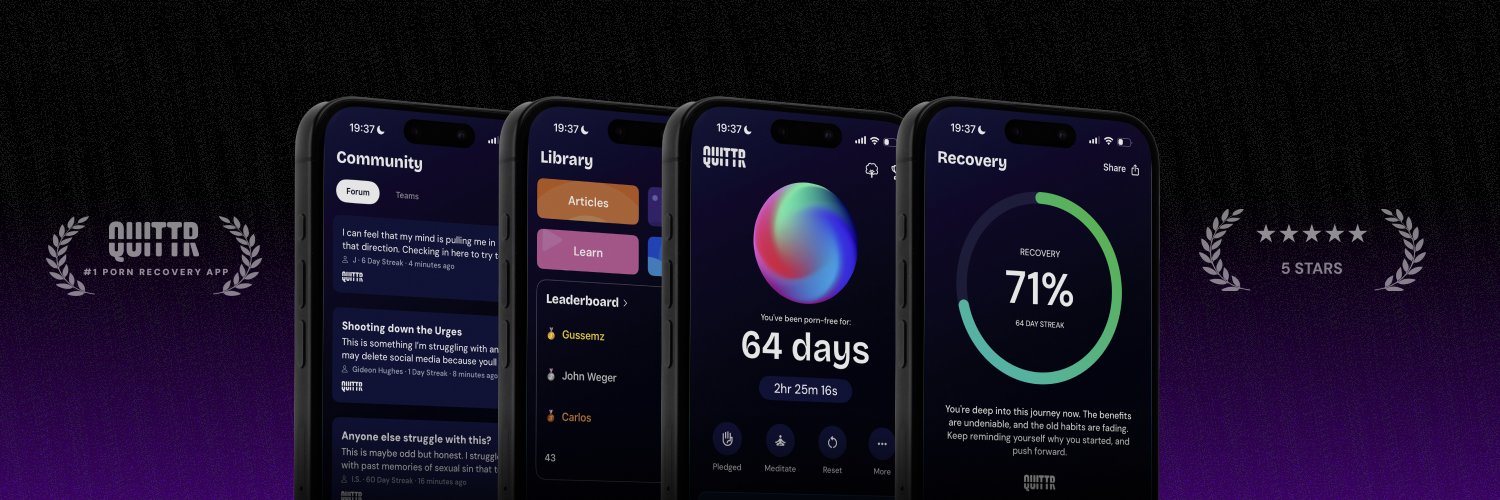
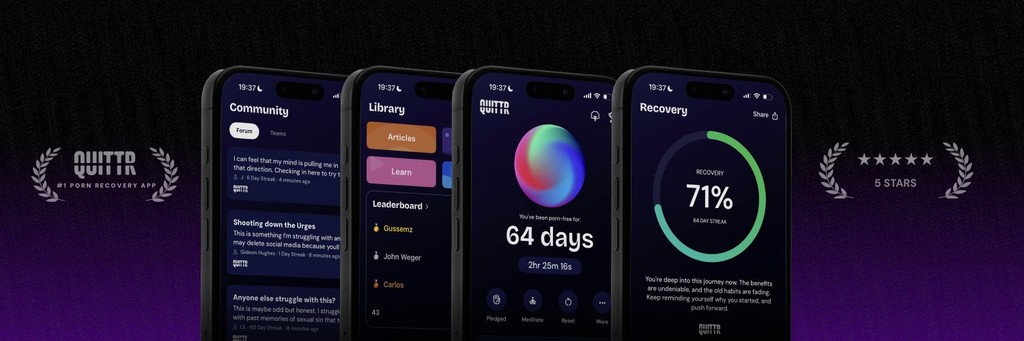
QUITTR focuses on habit change rather than screen spying. It tracks your streak, sets daily goals, sends reminders, and awards progress badges to help maintain high motivation. The app offers a panic button for managing strong urges and a private support space to discuss slips, while avoiding screenshot monitoring, as some Covenant Eyes reviews often note. Want a tool that trains your mindset and gives real relapse support?
2. Ever Accountable

Ever Accountable records the websites and apps you use and sends regular accountability partner reports without taking screenshots. You choose a trusted person to receive weekly reports, ensuring honesty while protecting your privacy from intrusive monitoring. It runs in the background across devices and supports internet accountability without heavy device monitoring. Who will be your accountability partner when temptation strikes?
3. Canopy

Canopy uses smart filtering to block explicit images and text across browsers and apps, catching content that simple URL filters miss. It includes uninstall protection and parental controls, so it stays in place when you need stronger filters and safe browsing on phones and tablets. The head-to-head between Canopy and Covenant Eyes comes down to prevention versus accountability: Canopy stops explicit images and video before they render on screen, while Covenant Eyes lets the content appear and then reports it to your ally — so families protecting kids tend to land on Canopy at $7.99 a month, while adults in partner-supported recovery tend to stay with Covenant Eyes. Do you want a blocker that targets pictures as well as links?
4. Net Nanny

Net Nanny blocks porn and other risky websites, logs web history, and works across computers, phones, and tablets so you can enforce clean browsing on multiple devices. It leans more toward parental controls and safe browsing than clinical porn addiction recovery, but it is a solid choice when budget and cross-device coverage matter. The app utilizes content filtering and real-time monitoring to prevent distractions and explicit content. Need a low-cost filter that runs across the household devices?
5. Fortify

Fortify pairs education with behavior change work to treat the reasons behind porn use rather than only blocking access. It includes lessons, videos, daily check-ins, a recovery journal, and community support, so you can learn about triggers and build coping skills that reduce the risk of relapse. Many users find it the best fit when they want to engage in deep emotional work, combining accountability with cognitive tools and progress tracking. Ready to work on the root causes of compulsive sexual behavior?
Join Our 28-day Challenge & Quit Porn Forever with the #1 Science-based Way To Quit Porn
QUITTR uses techniques tested in behavior change research. It pairs short daily habits with tracking and feedback to break automatic impulses. Cognitive tools reduce triggers, exposure control removes cues, and social accountability strengthens commitment. The app converts relapse risk into measurable data, enabling you to respond quickly and stay on track. How would you like to replace reactive shame with steady progress?
AI Support and an AI Therapist That Listens Without Judging
The AI-powered support system provides instant, non-judgmental coaching whenever urges arise. It uses cognitive behavioral prompts, coping scripts, and personalized reminders to steer thinking and behavior. You can practice responses, rewrite temptation scripts, and log triggers with conversational help. Want a coach at midnight who does not sleep or shame you for setbacks?
Content Blocker and Privacy Focused Filtering
QUITTR ships with a robust content blocker that works across browsers and devices to remove easy access to porn. Unlike some monitoring tools that only log activity, the blocker stops exposure before the habit loop restarts. The app strikes a balance between filtering and privacy controls, ensuring that personal data remains safe while protection is active. Which content should stay blocked for you?
Streak Tracker and the 28 Day Challenge That Builds Momentum
Tracking streaks converts abstract goals into daily wins. The streak tracker rewards consistency and exposes patterns that lead to relapse. The 28-day challenge creates a structured contest against temptation with leaderboards and community tracking. Competing for the longest streak makes accountability tangible and motivating for many people.
Community Leaderboards and Real Peer Support
Community leaderboards let you see where you stand while preserving anonymity if you choose. Peer competition raises engagement and lets members trade tips, wins, and setbacks. Community support reduces isolation, provides social proof that change is possible, and makes recovery a social process rather than a secretive one. Who in the group has a tip you can use today?
How QUITTR Compares with Covenant Eyes
People often search for Covenant Eyes reviews to compare accountability software, reporting features, and the effectiveness of blocking. Covenant Eyes focuses on activity reports, monitoring, and accountability partnerships. QUITTR differs by centering on personalized therapy support, AI coaching, in-app blocking, and social gamification, rather than relying on external reports. Users concerned about privacy, constant monitoring, or needing real-time coaching may find this approach worth considering. What balance between monitoring and coaching suits your recovery plan?
Getting Started: Practical Steps to Use QUITTR Today
Set one clear goal, enable the blocker, start the recovery journal, and join the 28-day challenge. Use the AI therapist in urgent moments, try three meditation mini sessions, and post one anonymous reflection to the leaderboard. Track triggers for two weeks and test changes to your environment based on the data you collect. What one small change will you make now to reduce risk?